 Skip-the-line available
 Things to Do in Córdoba Beyond the Mezquita
The Alcázar de los Reyes Cristianos, the Judería and Calleja de las Flores, the Roman Bridge, Medina Azahara and the May Festival de los Patios.
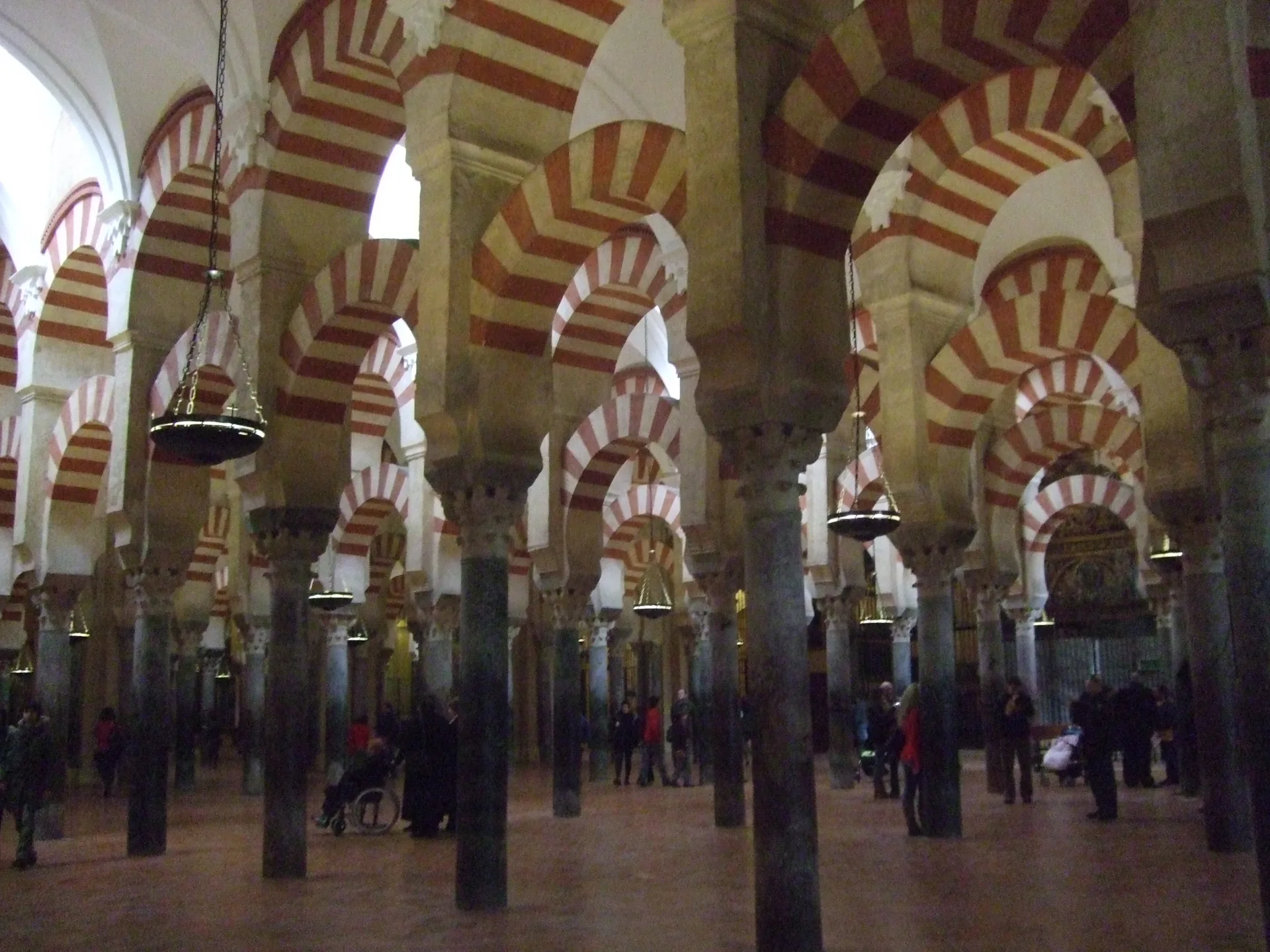
The Mezquita is the reason most visitors come to Córdoba, but the city wraps it in one of the densest concentrations of heritage in southern Spain — so dense that Córdoba holds four separate UNESCO recognitions: the Mezquita itself (1984), the wider Historic Centre (1994), the caliphal city of Medina Azahara (2018), and the living tradition of the May patios festival (intangible heritage, 2012). Within a few minutes' walk of the Mosque-Cathedral you can step into a Christian royal castle, a medieval Jewish quarter, a Roman bridge, and a maze of flower-filled courtyards; a short trip outside the city brings you to the ruins of a vanished caliphal capital. This guide covers the essential sights beyond the Mezquita and how to fit them around a morning or afternoon at the monument. None of these are part of our concierge booking — buy them directly — but they shape the rhythm of a full day in the city.
The Alcázar de los Reyes Cristianos
A five-minute walk south-west of the Mezquita through the Judería brings you to the Alcázar de los Reyes Cristianos, the fortified palace of the Christian monarchs. This was a royal residence from the 14th century, and it carries one of the great hinge-moments of European history: it was here that Ferdinand and Isabella received Christopher Columbus in 1486 as he sought backing for his Atlantic voyage. The Alcázar is best known today for its terraced gardens — long reflecting pools, clipped hedges, fountains and orange trees descending in formal tiers — and for its Roman mosaic collection and defensive towers, which give the best panorama over the old town and the river. It is a separate ticketed monument run by the city, not the Cabildo, so book it independently. The standard rhythm pairs the Mezquita in the morning with the Alcázar in the early afternoon, because Mezquita slots are harder to move than Alcázar entry.
The Judería and the Calleja de las Flores
Wrapping the north and west sides of the Mezquita is the Judería, Córdoba's old Jewish quarter — a maze of whitewashed lanes, wrought-iron grilles and tiled patios that is among the best-preserved medieval Jewish quarters in Spain. Within it sits the Sinagoga, one of only three surviving medieval synagogues in the country, and the small Casa de Sefarad museum of Sephardic heritage. The quarter's most photographed corner is the Calleja de las Flores, a tiny dead-end alley hung with blue flowerpots that frames the Mezquita's bell tower at its far end — go early to photograph it before the lane fills.
The Judería is also the city's best eating ground. The general rule near the Mezquita is to walk two or three minutes away from the monument before sitting down, as the bars on Calle Cardenal Herrero itself lean toward tourist prices. Deeper in the quarter, around Plaza de Tiberíades and the streets between Calle Romero and Calle Judíos, long-standing taverns serve Córdoba's signature dishes: salmorejo (a thick cold tomato-and-bread cream), flamenquín (a rolled pork-and-ham fritter), rabo de toro (oxtail stew) and local Montilla-Moriles wines. Lunch is the main meal in Córdoba and Spanish dinner runs late from around 21:00, so a late-morning Mezquita visit followed by a long lunch in the Judería is the natural rhythm of a day here.
The Roman Bridge and the Calahorra Tower
Five minutes south of the Mezquita the historic centre meets the Guadalquivir at the Roman Bridge — a long stone crossing first built in Roman times and rebuilt over the centuries, marking the original line of the Roman road through the city. It is now pedestrianised, and walking out across it gives the classic postcard view back toward the Mezquita and the old town, especially at sunrise or sunset when the low light catches the river and the bell tower. Avoid the bridge at midday in summer, when there is no shade on the span.
At the far end of the bridge stands the Torre de la Calahorra, a fortified medieval gate-tower that now houses a small museum of medieval Andalusian civilisation, telling the story of the coexistence of Muslim, Jewish and Christian cultures in Córdoba's golden age. The tower's roof terrace gives another fine view back across the river to the Mezquita. Pairing the bridge and the Calahorra with a sunset walk is the easiest way to close a full day in the city, ideally after the Mezquita in the morning and the Alcázar or the Judería in the afternoon.
Medina Azahara
For visitors with a half-day to spare, Medina Azahara is the most rewarding trip beyond the city. About eight kilometres west of Córdoba lie the excavated ruins of Madinat al-Zahra, the palace-city built from 936 as the glittering administrative capital of the Caliphate of Córdoba at the height of Al-Andalus — and abandoned and sacked barely a lifetime later in the early 11th century. UNESCO inscribed the site in 2018, and it is a genuine archaeological landscape: terraced halls, the reconstructed Salón Rico (the rich hall) with its carved marble panels, gardens and gateways spreading down a hillside, with a modern interpretation museum at the entrance.
Practically, Medina Azahara is outside the city and needs planning: there is a dedicated visitor centre and shuttle bus arrangement, and private cars are generally kept away from the ruins themselves, so most visitors take an organised excursion or the official shuttle from the city. It is a separate site with its own ticketing, not part of our concierge service, and is best treated as a standalone morning rather than squeezed in alongside the Mezquita on the same half-day. Verify the current shuttle and visitor-centre arrangements before you go, as access logistics are adjusted from time to time.
The Festival de los Patios
If you can time a visit for early-to-mid May, the Festival de los Patios is Córdoba's most distinctive experience and a UNESCO-recognised intangible cultural heritage tradition since 2012. For roughly two weeks, residents across the historic centre open their private courtyards — whitewashed walls layered with hundreds of flowerpots of geraniums and carnations, fountains and wells at the centre — to the public, competing in a long-running city contest. Walking the patio routes is free, although queues form at the most celebrated courtyards, and the city fills to capacity. The festival is also the single busiest week of the Córdoba year: book accommodation three or more months ahead, and reserve your Mezquita slot well in advance, because the monument is at its most crowded during patios season even though the festival itself happens in private homes a few streets away.
Frequently asked
What should I see in Córdoba besides the Mezquita?
The essentials are the Alcázar de los Reyes Cristianos and its gardens, the Judería (old Jewish quarter) with the Sinagoga and the Calleja de las Flores, the Roman Bridge and Calahorra Tower, and — with more time — the caliphal ruins of Medina Azahara just outside the city.
Is the Alcázar de los Reyes Cristianos worth visiting?
Yes — it is a five-minute walk from the Mezquita and famous for its terraced gardens, Roman mosaics and towers, and as the place where Ferdinand and Isabella received Christopher Columbus in 1486. It is a separate ticketed monument run by the city, so book it independently.
What is the Calleja de las Flores?
The Calleja de las Flores is a narrow flower-lined alley in the Judería, hung with blue flowerpots, that frames the Mezquita's bell tower at its far end. It is one of Córdoba's most photographed corners — visit early in the day before the lane fills with visitors.
How do I get to Medina Azahara from Córdoba?
Medina Azahara lies about eight kilometres west of the city. There is a dedicated visitor centre and a shuttle bus to the ruins, as private cars are generally kept away from the site, so most visitors take the official shuttle or an organised excursion. Confirm current arrangements before you go.
When is the Festival de los Patios in Córdoba?
The Festival de los Patios runs for roughly two weeks in early-to-mid May, when residents open their flower-filled private courtyards to the public. It is a UNESCO-recognised intangible cultural heritage tradition and the busiest week of the Córdoba year — book accommodation and your Mezquita slot well ahead.
Can I see the Mezquita, Alcázar and Roman Bridge in one day?
Yes. A typical full day is the Mezquita in the morning, lunch in the Judería, the Alcázar de los Reyes Cristianos in the early afternoon, and the Roman Bridge and Calahorra Tower at sunset. Do the Mezquita first because its timed slots are harder to move than the other sites.